The Evolution of Media Workflows in the AI Era
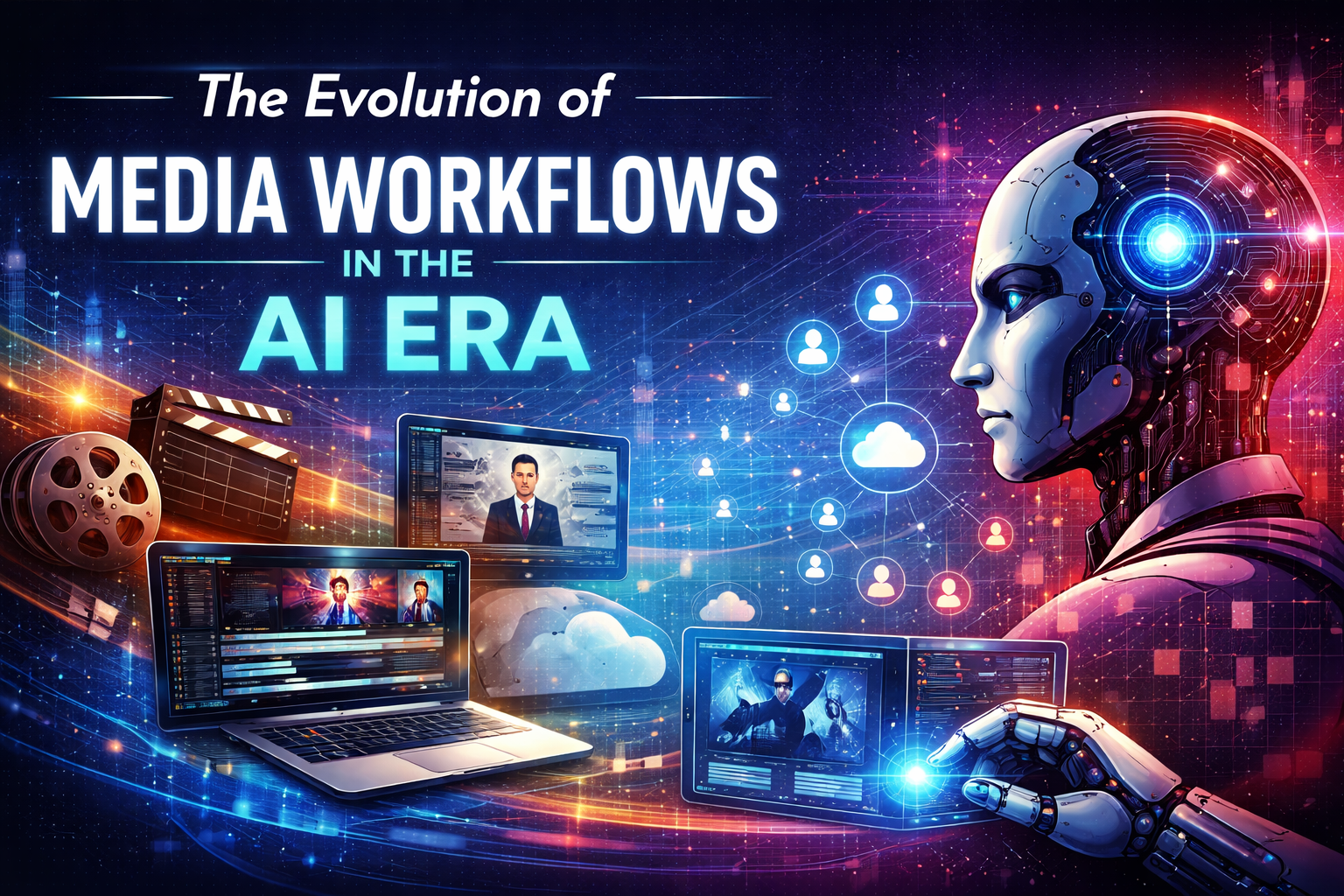
The media industry has always been at the forefront of innovation, adapting to new technologies that transform how content is created, managed, and distributed. From the days of analog editing suites to the rise of cloud-based production tools, the workflow of media organizations has continuously evolved. Today, we are entering a new era—one defined by artificial intelligence (AI), automation, and intelligent media management. This shift is not just incremental; it is reshaping the entire media landscape.
From Linear to Digital: The First Transformation
The media industry has undergone a significant transformation over the past few decades, moving from traditional linear workflows to digital platforms. In the past, media companies relied on physical tapes and manual processes to produce and distribute content. However, with the advent of digital technology, media workflows have become more streamlined and efficient. Digital platforms have allowed media companies to reach a wider audience and deliver content in a more timely manner. This shift has also opened up new opportunities for monetization and audience engagement.
AI as the New Game-Changer
Artificial intelligence (AI) has emerged as a game-changer in the media industry, revolutionizing the way content is created, distributed, and consumed. AI technologies such as machine learning and natural language processing have enabled media companies to automate repetitive tasks, personalize content for individual users, and analyze data to make more informed decisions. AI has also played a key role in improving the quality of content through tools like automated editing and image recognition. As AI continues to evolve, media workflows will become even more efficient and effective.
Collaboration in the Cloud-Driven, AI-Enhanced Workflow
The rise of cloud computing has transformed the way media companies collaborate and share content. Cloud-based platforms allow teams to work together in real-time, regardless of their physical location. This has enabled media companies to streamline their workflows and improve communication between departments. With the integration of AI technologies, cloud-driven workflows have become even more powerful. AI can analyze vast amounts of data stored in the cloud, providing insights that can inform content creation and distribution strategies. This level of collaboration and efficiency would have been unimaginable in the linear workflows of the past.
Challenges in the AI Era
While AI has brought many benefits to the media industry, it has also presented challenges that must be addressed. One of the biggest challenges is the ethical implications of using AI to create and distribute content. As AI becomes more sophisticated, there is a risk that it could be used to manipulate or deceive audiences. Media companies must be transparent about how AI is being used and ensure that it is being used responsibly. Another challenge is the potential for job displacement as AI technologies automate tasks that were previously done by humans. Media companies must invest in training and upskilling their employees to ensure they can adapt to the changing landscape.
The Future of Media Workflows
As we look to the future, it is clear that AI will continue to play a central role in shaping media workflows. AI technologies will become even more advanced, enabling media companies to create more personalized and engaging content. Collaboration in the cloud will become the norm, as teams work together seamlessly to produce high-quality content. Despite the challenges that AI presents, the opportunities for innovation and growth in the media industry are vast. By embracing AI and adapting to the changing landscape, media companies can position themselves for success in the AI era.