Design: Blending Creativity with Functionality
What Is Design?
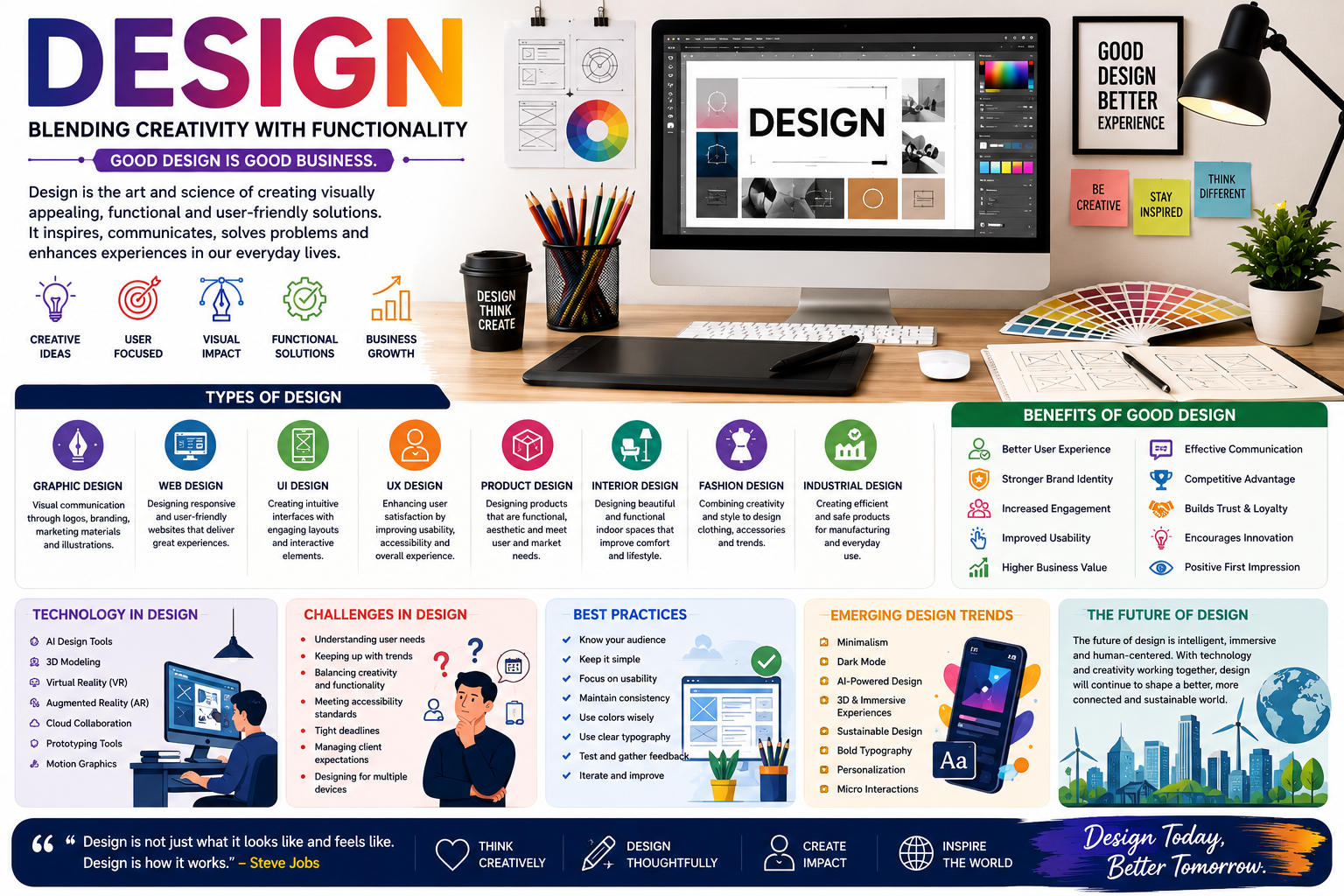
Design is the process of planning and creating visual, digital, or physical solutions that combine creativity, functionality, and user experience to solve problems effectively.
Importance of Design
Design plays a vital role in:
- Enhancing user experience
- Strengthening brand identity
- Improving communication
- Increasing product usability
- Encouraging innovation
- Solving complex problems
- Supporting business growth
- Creating memorable customer experiences
- Improving accessibility
- Driving customer engagement
Types of Design
1. Graphic Design
Creates visual content for branding, advertising, marketing, packaging, and digital media.
2. Web Design
Focuses on designing responsive, attractive, and user-friendly websites.
3. UI (User Interface) Design
Designs digital interfaces such as buttons, layouts, menus, and interactive elements.
4. UX (User Experience) Design
Improves how users interact with products by making them intuitive, efficient, and enjoyable.
5. Product Design
Develops functional and visually appealing physical and digital products.
6. Interior Design
Designs indoor spaces to improve functionality, comfort, and aesthetics.
7. Fashion Design
Creates clothing, footwear, and accessories that combine creativity with functionality.
8. Industrial Design
Designs consumer products, equipment, and manufacturing solutions with usability and efficiency in mind.
Benefits of Good Design
Good design provides many advantages, including:
- Better customer satisfaction
- Improved usability
- Stronger brand recognition
- Increased customer engagement
- Enhanced accessibility
- Greater creativity
- Higher product value
- Competitive business advantage
- Improved communication
- Increased sales and conversions
Technology in Design
Modern design is supported by:
- Artificial Intelligence (AI)
- 3D Modeling Software
- Computer-Aided Design (CAD)
- Virtual Reality (VR)
- Augmented Reality (AR)
- Design Collaboration Platforms
- Digital Illustration Tools
- Cloud-Based Design Software
Challenges in Design
Common challenges include:
- Understanding user needs
- Balancing creativity and functionality
- Maintaining design consistency
- Meeting accessibility standards
- Managing project deadlines
- Keeping up with design trends
- Handling client expectations
- Designing for multiple devices
Best Practices for Effective Design
To create impactful designs:
- Understand your target audience.
- Keep designs simple and functional.
- Focus on usability.
- Maintain visual consistency.
- Use readable typography.
- Choose colors strategically.
- Test designs with users.
- Continuously improve based on feedback.
Emerging Design Trends
Modern design continues to evolve through:
- AI-assisted design
- Minimalist interfaces
- Sustainable design
- Motion graphics
- Personalized user experiences
- Dark mode UI
- Immersive AR and VR experiences
- Inclusive and accessible design
Future of Design
The future of design will focus on intelligent automation, sustainability, immersive technologies, and highly personalized user experiences. Designers will increasingly leverage AI, AR, VR, and advanced collaboration tools to create innovative solutions that are both visually engaging and highly functional.
Conclusion
Design is much more than aesthetics—it is a powerful combination of creativity, strategy, and functionality that improves products, services, and user experiences. By embracing innovation and user-centered design principles, businesses and designers can create impactful solutions that inspire, engage, and drive long-term success in an increasingly digital world.